
Equifin Finance Broker

A Guide for New Build and Off-the-Plan Buyers

Before You Sign

5 finance questions for buyers building new or buying off the plan, from shortlisting a development to getting the keys. The questions that keep a deal standing through a 12 to 24 month build, written for first home buyers and investors alike.

  • Check lenders will lend on your postcode and building
  • Confirm your builder is approved and your contract protects you
  • Line up your deposit with the builder payment schedule
  • Plan for settlement delays and a valuation gap before you sign
Sent straight to your inbox
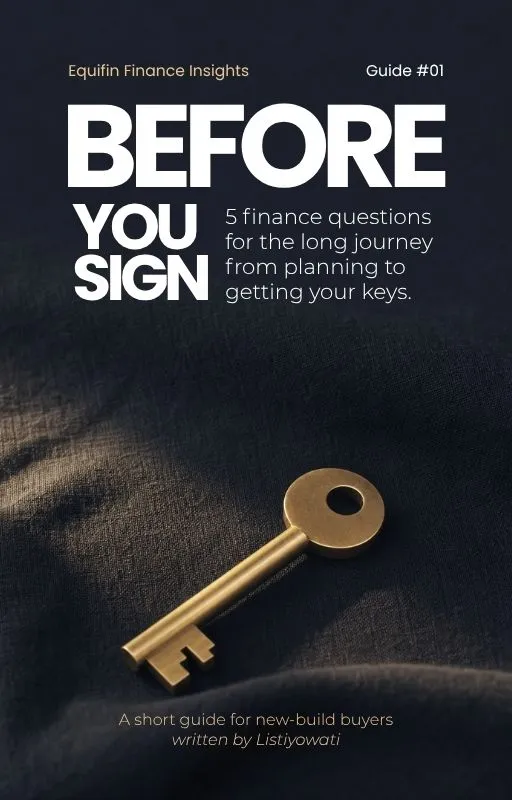
Cover of the Equifin guide, Before You Sign, 5 Finance Questions

Get the guide

Tell us where to send it and we'll email you the guide.

I am a...

Grants and concessions differ by state, so this helps us point you to what applies where you're buying.

We'll email you the guide. No spam, unsubscribe anytime.

What's Inside

The guide is built around five finance questions that follow the new-build journey, from shortlisting a development to settlement day. Here is a preview of each.

1. Does the lender actually want to lend in this postcode?

Lenders cap how much they will lend in any one building, street or postcode. You can be a strong borrower and still be knocked back because of where the property is. The guide helps you check that at least two lenders actively lend on your shortlist before you fall for a development.

2. Has the lender approved your builder?

Banks keep a list of builders they will lend against, and with builder insolvencies a real risk, they are stricter than they used to be. The guide covers builder approval, fixed-price contracts, building insurance, sunset clauses and variation costs, so a wobbly builder does not sink your loan.

3. Is your deposit ready at the right moments?

New builds do not work like an established purchase. House-and-land packages need progress payments at each stage, and off-the-plan apartments often need a deposit held for the whole build. The guide shows how to map your cash to the builder payment schedule, and where a deposit bond can help.

4. What happens if settlement gets delayed?

A pre-approval usually lasts about 90 days, but a build can take 12 to 24 months, and the bank reassesses you before settlement. If your borrowing power has dropped, you may not be able to settle. The guide covers how to keep your file settlement-ready through a long build.

5. What if the finished property is worth less than you paid?

You agree a price today, but the bank values the finished property at settlement, and it can come in below your contract price. The bank lends against the lower figure, so you cover the gap in cash. The guide shows how to stress-test for a 5% to 10% shortfall before you sign.

Want to map your repayments before you commit? Run the numbers with our smart mortgage calculator.

Your New-Build Readiness Checklist

The guide closes with a stage-by-stage checklist that follows the journey from shortlist to settlement. Here are the five stages it covers.

  1. 1.

    Lender appetite

    Check at least two lenders actively lend on your postcode and building.

  2. 2.

    Builder approval

    Confirm your builder is approved and your contract protects you.

  3. 3.

    Deposit timing

    Line your cash up against the builder payment schedule.

  4. 4.

    Settlement risk

    Keep your file settlement-ready through a long build.

  5. 5.

    Valuation buffer

    Set aside a buffer for a 5% to 10% valuation shortfall.

Common Questions

Why are investors and first home buyers moving toward new builds in 2026?

The 2026 federal budget changed how investment property is taxed, which has drawn both investors and first home buyers toward off-the-plan apartments and house-and-land packages. For the tax detail, see our 2026-27 Federal Budget breakdown and speak with your accountant. This guide covers the finance side.

Can I use a construction loan for an investment property?

Yes. Construction and off-the-plan finance is available for investment purchases as well as owner-occupied homes, though the deposit, serviceability and valuation checks can differ. The five questions in this guide apply whether you are buying to live in or to invest.

How do a construction loan and progress payments work?

A construction loan is drawn down in stages as each phase of the build is completed, and you generally pay interest only on the amount drawn so far. The guide explains how to line your cash up against the builder payment schedule.

What deposit do I need to buy off the plan?

Off-the-plan apartments often need a deposit held in trust for the whole build, while house-and-land packages use staged progress payments. Some developers accept a deposit bond instead of cash. The guide walks through the options so your cash is ready when the contract calls for it.

I am buying my first home. Should I read anything else?

Yes. If this is your first home, our Before You Buy guide covers the grants and schemes you may be able to use, including on a new build. Read both to cover the schemes and the new-build finance risks.

Who This Guide Is For

Whether you are buying your first home as a new build, purchasing off the plan, or adding a newly built investment property, the finance side is what keeps the deal standing from signing to settlement. For what the 2026 budget changes mean, see our 2026-27 Federal Budget breakdown, and check the tax detail with your accountant.

Get Your Guide

Ask the right finance questions before you build or buy off the plan.

Get the guide

Enter your details and we'll email you the guide.

I am a...

Grants and concessions differ by state, so this helps us point you to what applies where you're buying.

We'll email you the guide. No spam, unsubscribe anytime.

Prefer to talk it through? Get in touch with an Equifin broker.

Stay Informed

Get mortgage and property insights delivered to your inbox. No spam, just the updates that matter.